
Old Age Homes vs Assisted Living: Which Is Right for Your Parent?
Both can provide seniors a good home. The difference lies in how much everyday support they need.
When families begin looking for a residential option for an ageing parent, they often encounter two terms: old age home and assisted living home. It is tempting to see them as an old model versus a new one, or a basic option versus a premium one.
That is not necessarily the right way to look at it.
Both can serve an important purpose. An old age home may suit a senior who is largely independent but wants security, companionship and freedom from managing a household. Assisted living is designed for someone who additionally requires regular help with everyday living.
So the real question is not “Which is better?” It is “How much support does my parent need today — and how might that change with age?”
When an Old Age Home May Be the Right Choice
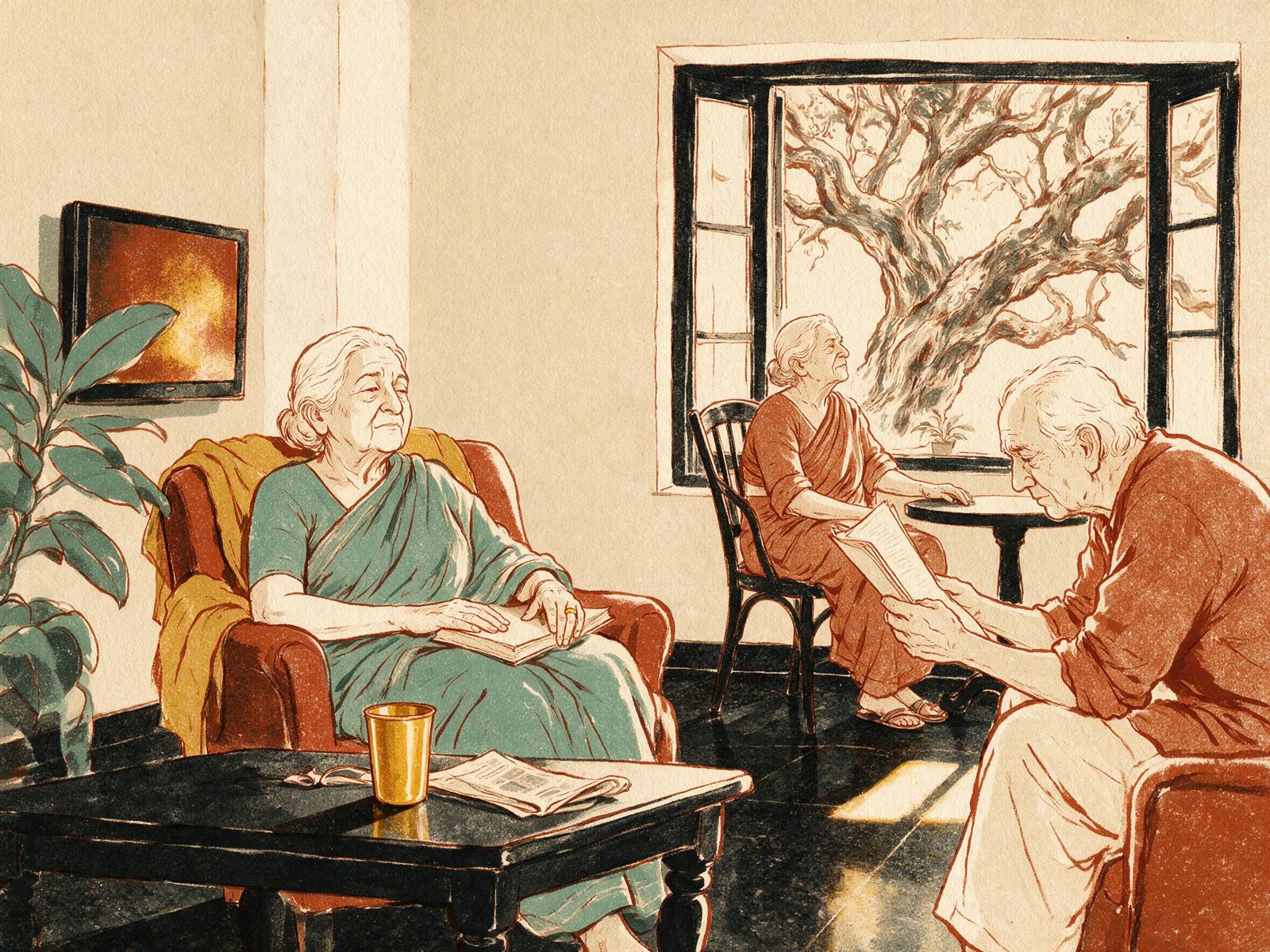
Old age homes have been part of India's elder-care ecosystem for decades. Many are run by charitable trusts, religious institutions, NGOs, community organisations and private operators. They can provide seniors with a safe place to live, regular meals, companionship, activities and a community of people at a similar stage of life.
For a reasonably independent senior, this may be exactly what is needed.
Someone who can bathe, dress, eat, use the toilet, move around safely and manage most personal routines independently may not require a high level of daily caregiving. What they may value more is a secure environment, freedom from cooking and household maintenance, and the opportunity to interact with other people.
A well-run old age home can therefore be an appropriate and dignified choice.
KEY TAKEAWAY: An old age home may be suitable when the primary requirement is accommodation, security, meals and companionship rather than regular personal assistance.
What Makes Assisted Living Different?
Assisted living becomes relevant when an older person can no longer comfortably or safely manage every part of daily life alone.
A parent may still be mentally alert, conversational and capable of making decisions, yet need help getting in and out of bed. Another may walk independently but require medication reminders. Someone else may need assistance with bathing, dressing or toileting, or reassurance because of mild forgetfulness.
These everyday functions are often described as Activities of Daily Living (ADLs). The level of assistance a person needs with such activities is an important consideration when deciding the appropriate care environment.
The World Health Organization's approach to healthy ageing similarly emphasises functional ability, rather than looking only at the presence or absence of disease. It recommends person-centred care based on an older person's individual abilities, needs and circumstances.
In practical terms, assisted living combines a residential environment with structured support for everyday living. Depending on the facility and the resident's needs, this may include caregiver assistance, medication support, mobility assistance, meals, activities, monitoring and coordination with doctors or hospitals when required.
It is important, however, to distinguish assisted living from a hospital or nursing facility. Assisted living supports daily life; medical diagnosis and treatment remain the responsibility of qualified healthcare professionals.
KEY TAKEAWAY: The distinction is less about the building and more about the support available when a senior needs help getting through the day safely and comfortably.
The Right Choice Can Change as a Parent Ages
One of the most important realities of ageing is that care requirements do not remain static.
At 70, a parent may be completely independent and simply prefer living in a senior community. At 80, the same person may begin needing help with medication or mobility. At 87, assistance with several daily activities may become necessary.
The WHO's Integrated Care for Older People framework recognises that ageing can involve changes in areas such as mobility, cognition, nutrition, vision, hearing and psychological wellbeing. The appropriate response is therefore not a one-size-fits-all model, but care that responds to the individual's changing functional ability.
India's rapidly ageing population makes these conversations increasingly relevant. The India Ageing Report 2023, published by UNFPA India in collaboration with the International Institute for Population Sciences, examines the changing living conditions, care needs and institutional responses surrounding older people in India.
Choosing an old age home today, therefore, does not mean that it was the wrong decision if assisted living becomes necessary later. The parent's needs may simply have changed.
What Should Families Look at Before Deciding?
Instead of beginning with the label on the facility, families can begin by observing the senior's everyday life.
Can your parent bathe and dress safely without assistance? Can they walk to the bathroom at night? Are medicines being taken correctly? Can they manage meals and hydration? Have there been falls or near-falls? Is forgetfulness beginning to interfere with daily routines? If something unexpected happens, can they seek help?
There is another useful question: What assistance is the family or domestic caregiver already providing at home?
Sometimes a parent appears completely independent because someone is quietly organising medicines, preparing every meal, accompanying them to appointments, helping with bathing or remaining available during the night. If the senior moves into residential care, those functions do not disappear; the new environment must be capable of providing them.
What We See at Priaashraya
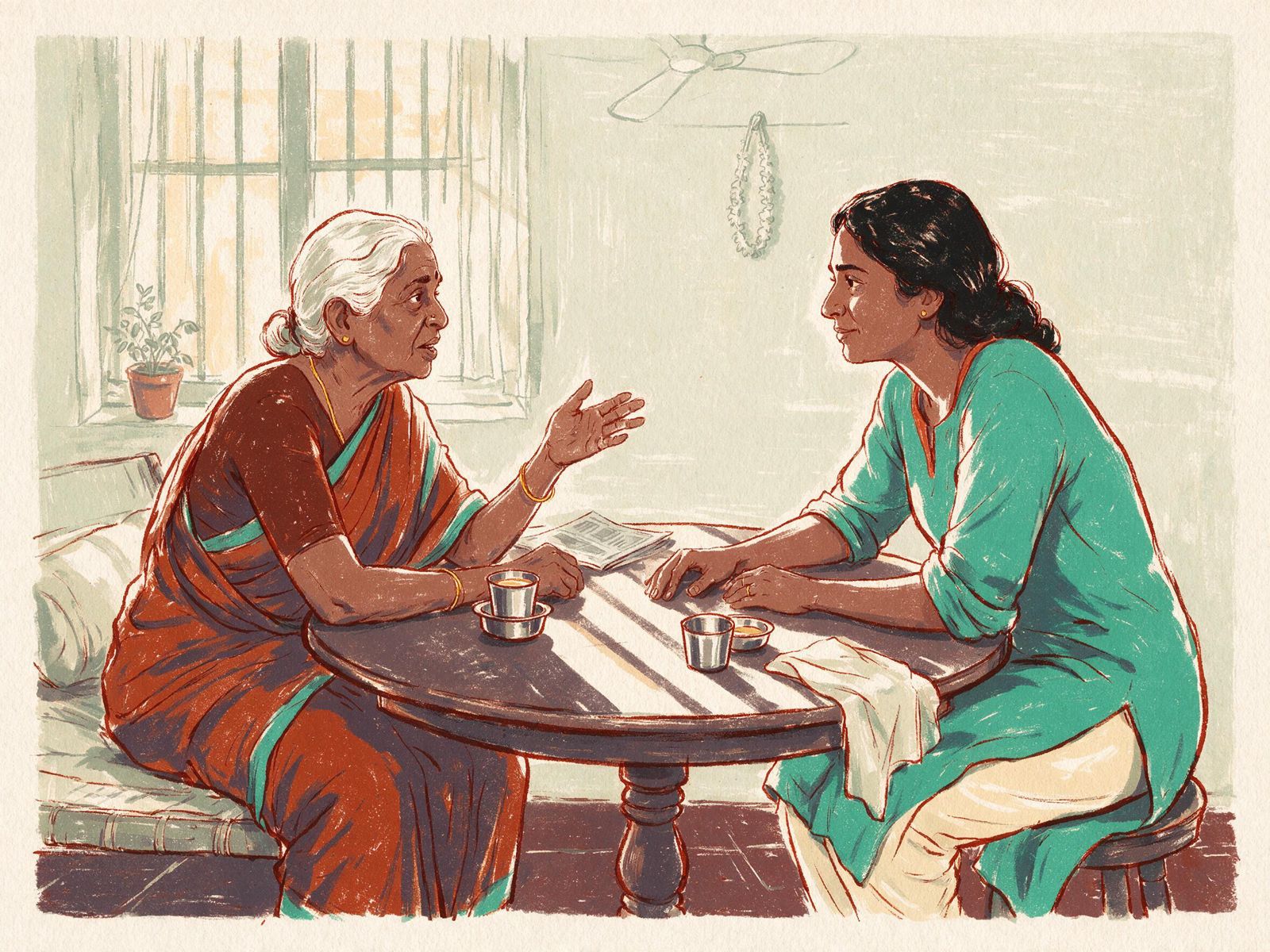
Families approaching Priaashraya often begin by asking about rooms, food, facilities and monthly charges. As the conversation progresses, however, the more important questions usually concern the parent's daily routine and level of dependence.
In our experience supporting seniors, two people of the same age can require very different levels of assistance. An active 85-year-old may manage most things independently, while someone considerably younger may require help because of mobility limitations, recovery after an illness, Parkinson's disease, a previous stroke or mild cognitive changes.
That is why age alone should not determine the choice of residential care.
At Priaashraya, our role is non-medical assisted living and supportive senior care. We focus on understanding the senior's functional requirements and providing appropriate everyday support, while medical diagnosis and treatment remain with doctors and healthcare providers.
Choose the Level of Care, Not the Label
“Old age home” sometimes carries an unnecessary social stigma in India, while “assisted living” may sound newer or more sophisticated. Neither perception should decide where a parent lives.
A good old age home can provide security, community, companionship and dignity to an independent senior.
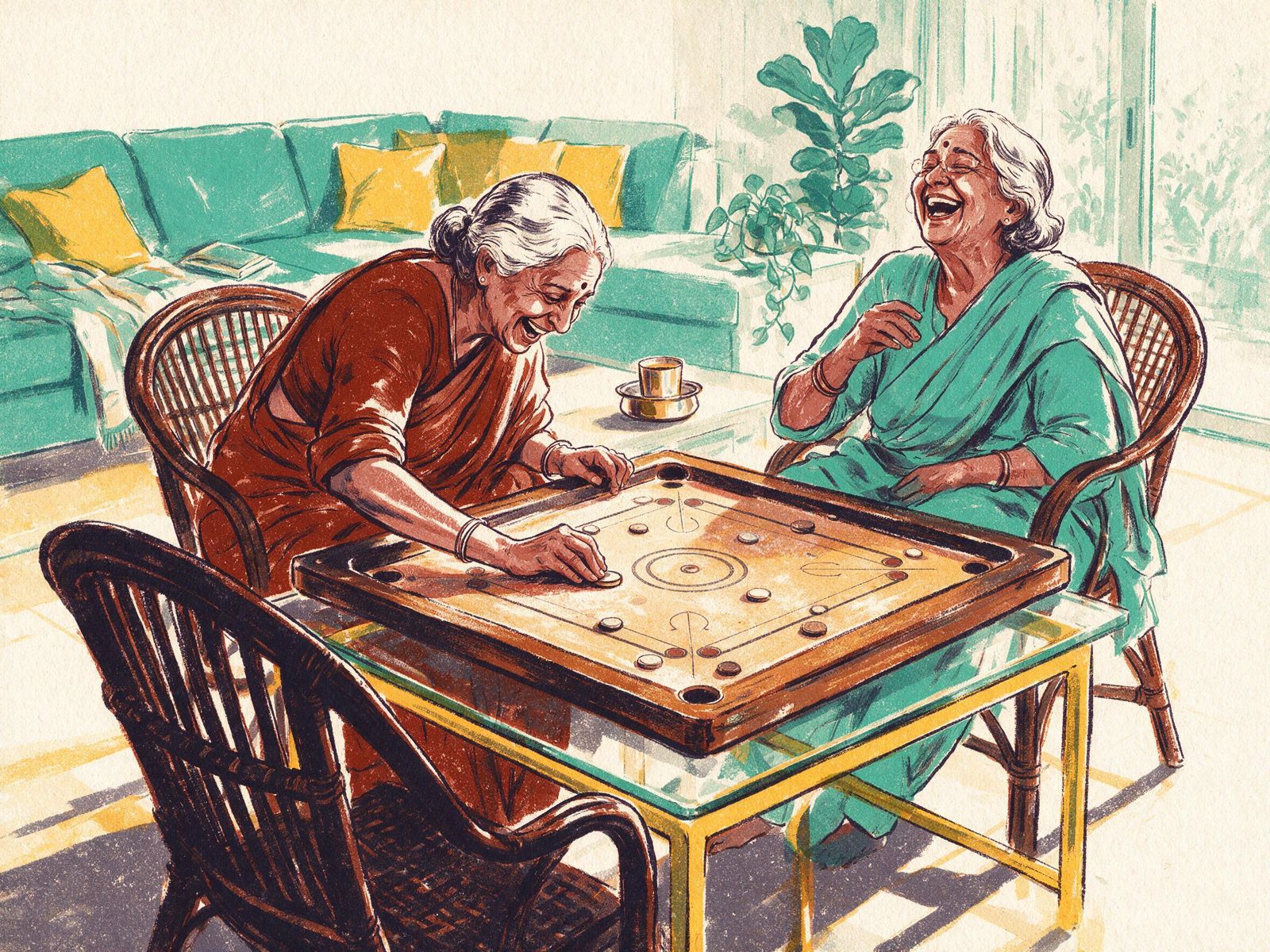
A good assisted living home can provide those same benefits with an additional layer of structured everyday assistance for a senior who needs it.
The better choice is therefore not determined by terminology. It is the environment that provides the right amount of support at the right stage of ageing — enough to keep the senior safe and comfortable, without unnecessarily taking away independence.
Because ageing is different for every person, the right place to live should be determined by the person, not simply by their age.
References & Further Reading
1. World Health Organization (WHO) — Integrated Care for Older People (ICOPE): Guidance for Person-Centred Assessment and Pathways in Primary Care, 2nd edition, 2025.
2. World Health Organization (WHO) — Integrated Care for Older People: Guidelines on Community-Level Interventions to Manage Declines in Intrinsic Capacity, 2017.
3. World Health Organization (WHO) — Transforming Health and Social Services Towards More Person-Centred and Integrated Care.
4. UNFPA India & International Institute for Population Sciences (IIPS) — India Ageing Report 2023: Caring for Our Elders — Institutional Responses.
ABOUT THIS ARTICLE
Grounded in experience. Written for families.
Drawn from Priaashraya's practical experience with older adults and families, supported by established senior-care practices and reliable sources.
For general information only; health-related content is not a substitute for professional medical advice.
© 2026 Priaashraya Healthcare Pvt. Ltd. All rights reserved.
Recent posts


Our homes in Bengaluru


Tell us about your situation
Fill in as much as you're comfortable sharing. One of our senior care advisors will call you back to talk it through.
A conversation, not a pitch.